



In the realm of modern livestock farming, the efficient handling of large - sized materials is a critical challenge. As a leading supplier of robot feed pushers, we have witnessed firsthand the transformative impact of our technology on this aspect of the industry. In this blog, we will explore how our robot feed pushers are designed and equipped to handle large - sized materials effectively.
Understanding the Challenge of Large - Sized Materials in Livestock Feeding
Large - sized materials, such as bales of hay, large silage blocks, or bulky feed mixtures, present unique difficulties in livestock farming. These materials are heavy, cumbersome, and require significant physical effort to move and distribute. Manual handling of large - sized materials is not only labor - intensive but also time - consuming, and it may lead to inconsistent feed distribution. Moreover, the risk of injury to farm workers is relatively high when dealing with these heavy materials.
Design Features of Our Robot Feed Pushers for Large - Sized Materials
Robust Construction
Our robot feed pushers are built with a heavy - duty frame and structural components. This robust construction allows them to withstand the weight and force exerted when pushing large - sized materials. The frames are made from high - strength steel alloys that can endure the rigors of daily use in a farm environment. For example, the main body of the robot is designed with thick steel plates and reinforced joints to prevent bending or breaking under heavy loads.
Powerful Driving System
A powerful driving system is essential for handling large - sized materials. Our robot feed pushers are equipped with high - torque motors that provide sufficient power to move heavy feed. The drive wheels are designed with a large diameter and a deep tread pattern to ensure excellent traction on various surfaces, including uneven barn floors. This allows the robot to move large - sized materials smoothly and efficiently, even when the ground conditions are less than ideal.
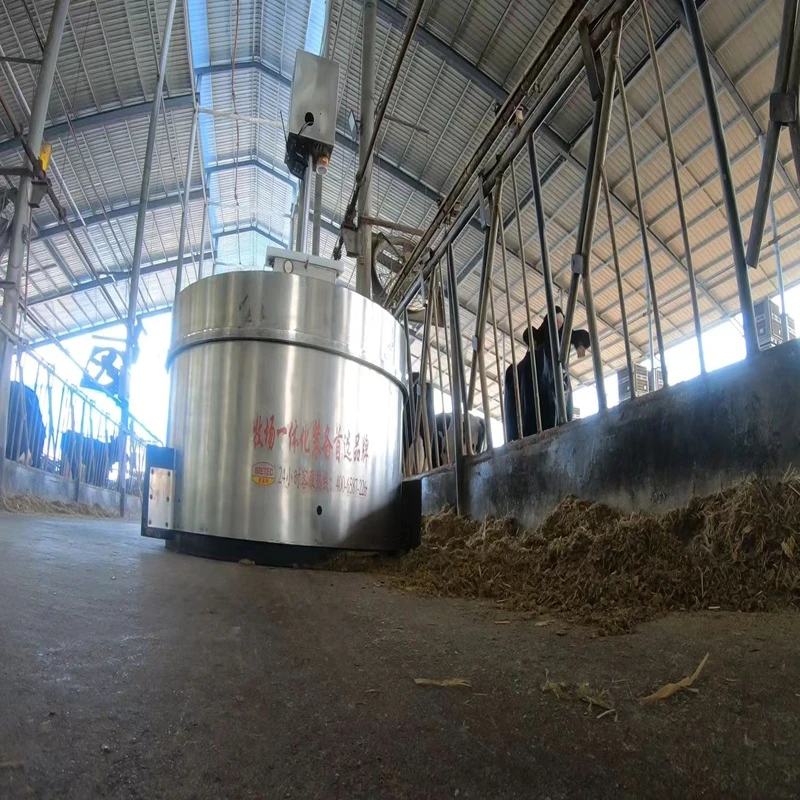

Adaptive Pushing Mechanism
The pushing mechanism of our robot feed pushers is designed to adapt to different sizes and shapes of large - sized materials. It can be adjusted to apply the right amount of pressure, ensuring that the materials are pushed forward without being crushed or damaged. For instance, the pusher plate can be extended or retracted depending on the width of the material, and the angle of the plate can also be adjusted to optimize the pushing force.
Advanced Sensors and Navigation for Precision Handling
Sensor Technology
Our robot feed pushers are equipped with a variety of sensors to detect and interact with large - sized materials. Laser sensors are used to measure the distance and shape of the materials, allowing the robot to adjust its movement accordingly. These sensors can detect obstacles in the path of the robot, such as large feed bales or equipment, and make real - time decisions to avoid collisions. Ultrasonic sensors are also used to detect the presence of materials in close proximity, ensuring that the pushing process is carried out safely and accurately.
Navigation Systems
The navigation systems in our robot feed pushers play a crucial role in handling large - sized materials. We offer Self - guided and Automated Feed Pusher that use advanced GPS and mapping technologies to navigate the farm environment. The robot can be pre - programmed to follow a specific path, ensuring that large - sized materials are pushed to the correct feeding areas. Additionally, the self - navigating feature allows the robot to adapt to changes in the environment, such as the movement of livestock or the rearrangement of equipment.
Benefits of Using Our Robot Feed Pushers for Large - Sized Materials
Increased Efficiency
By using our robot feed pushers to handle large - sized materials, farmers can significantly increase the efficiency of their feeding operations. The robots can work continuously without breaks, reducing the time required to distribute feed. This allows farmers to focus on other important tasks, such as animal health management and farm maintenance.
Consistent Feed Distribution
Our robot feed pushers ensure consistent feed distribution, even when dealing with large - sized materials. The adaptive pushing mechanism and precise navigation systems ensure that the feed is pushed evenly across the feeding area, providing equal access to food for all livestock. This helps to improve the overall health and productivity of the animals.
Reduced Labor Costs
Manual handling of large - sized materials requires a significant amount of labor. By replacing manual labor with our robot feed pushers, farmers can reduce their labor costs. The robots can perform the task of pushing large - sized materials with minimal human intervention, freeing up farm workers for other more skilled tasks.
Case Studies: Real - World Applications
In many farms around the world, our Livestock Farming Feed Pusher Robot has proven its effectiveness in handling large - sized materials. For example, in a large dairy farm in the Midwest, the farm was struggling with the manual handling of large hay bales. The heavy bales were difficult to move and distribute evenly, leading to uneven feeding and lower milk production. After implementing our robot feed pusher, the farm saw a significant improvement. The robot was able to move the large bales quickly and accurately, ensuring that the cows had access to fresh feed at all times. As a result, milk production increased by 15% within a few months.
Another case is a sheep farm in Australia. The farm had a large amount of bulky silage blocks that needed to be distributed across the paddocks. The manual process was slow and labor - intensive, and it was difficult to reach all the feeding areas. Our Self - navigating Feed Pushing Robot was introduced, and it could easily navigate the uneven terrain of the paddocks and push the silage blocks to the desired locations. This not only saved labor but also improved the health of the sheep due to more consistent feeding.
Conclusion and Call to Action
In conclusion, our robot feed pushers are specifically designed to handle large - sized materials in livestock farming. With their robust construction, powerful driving systems, advanced sensors, and navigation technologies, they offer a reliable and efficient solution for farmers. By using our robot feed pushers, farmers can increase efficiency, improve feed distribution, and reduce labor costs.
If you are interested in learning more about how our robot feed pushers can benefit your livestock farming operation, we encourage you to contact us for a consultation. Our team of experts is ready to provide you with detailed information and answer any questions you may have. Let's work together to take your livestock farming to the next level.
References
- Agricultural Machinery Handbook: A guide to modern farming equipment including feed pushers.
- Studies on the Impact of Automated Feed Distribution on Livestock Productivity.
- Technical reports on the design and testing of robot feed pushers.


