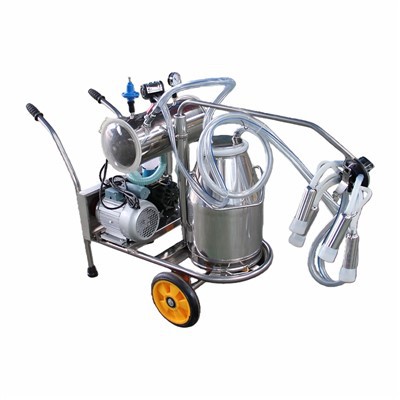

A milking machine is an agricultural machine consisting of a milking unit and a vacuum system, which simulates the sucking action of a calf to perform milking. Main types include bucket, pipeline, and rail-type milking machines, as well as rotary, herringbone, and parallel milking parlors. The appropriate model should be selected based on the characteristics of the cow's teats and the size of the farm. A single milking session typically lasts 6 minutes and 30 seconds to 7 minutes and includes features such as teat recognition, automatic cup removal, and disinfection.
The milking machine uses a vacuum pump and pulsator working together, employing a two-phase mode of suction and compression. The milk is transported through sealed pipes to a storage tank. During operation, the health of the udder should be checked, ensuring teat elasticity and stable vacuum pressure. Daily maintenance includes checking the vacuum pump oil level and rubber component wear; weekly maintenance involves checking the pulsation rate and milk pump check valve; monthly maintenance includes servicing the vacuum regulator and pressure tank float valve; and annual maintenance involves a comprehensive inspection by an engineer. Some models integrate smart collars to monitor cow milk yield and physiological indicators, supporting 24-hour continuous operation.