


1. Intelligence & Digitalization (The Core Growth Driver)
Ubiquitous IoT & PLC Deployment
Over 70% of manufacturers will comprehensively deploy IoT monitoring, automated weighing, and intelligent control systems. The market penetration of smart models is projected to reach by 2030 (up from approximately 22% in 2025).
Advanced AI Integration
AI algorithms will dynamically optimize mixing sequences, rotor speeds, and feeding orders, consistently keeping the Coefficient of Variation (CV) ( for micro-ingredients). Automated anomaly alerts and predictive maintenance will reduce operational and maintenance costs by 25–30%.
Data Integration & End-to-End Traceability
Features will include encrypted recipe storage, full-batch traceability, and remote diagnostics. Seamless integration with farm and feed mill ERP systems will support precision feeding and real-time cost analysis.
2. High Homogeneity, Minimal Residue, & High Efficiency (Core Performance Metrics)
Mixing Homogeneity (CV) Benchmarks
A CV will become standard for compound feed, while a CV will become the baseline for premixes and specialty feeds.
Compressed Cycle Times
Standard horizontal mixers will achieve cycle times of 3–5 minutes per batch, while high-efficiency models will slash this to 90–180 seconds, boosting throughput by 30–50%.
Ultra-Low Residue Design
Utilizing full-bottom discharge gates, zero-dead-zone geometries, and quick-release structures, residue rates will drop below 0.1%. This addresses frequent recipe changeovers and strictly prevents cross-contamination.
Optimized Fill Factors (Load Coefficient)
Optimal fill ratios will be maintained at 0.7–0.8 for horizontal mixers and 0.6–0.7 for vertical mixers to balance throughput with mixing homogeneity.
3. Green, Low-Carbon, & Energy Efficiency (Regulatory Driven)
High-Efficiency Powertrains
Adopting IE3/IE4 permanent magnet synchronous motors (PMSM) and variable frequency drives (VFD) will cut energy consumption per ton of throughput by 10–15%.
Electrification & Hybridization
The market share of electric TMR mixers and hybrid towed models is expected to surge from 8% in 2025 to 25% by 2030, delivering zero-emission and low-noise operations.
Sustainable Manufacturing & Materials
Utilizing laser welding, eco-friendly powder coating, and premium 304/316 stainless steel will lower lifecycle carbon emissions by over 15%.
Acoustic & Dust Control
Integrated sealing and dust collection systems will ensure strict compliance with environmental regulations and significantly improve workplace safety.
4. Modularity, Multi-Functionality, & Structural Innovation
Modular Architecture (The Industry Standard)
Deconstructing equipment into independent modules-frames, rotor shafts, discharge gates, weighing systems, and electronic controls-enables on-demand configuration, rapid customization, and simpler maintenance, lowering overall costs by 20%+.
Multi-Functional Integrated Systems
All-in-one stationary units will combine mixing, grinding, conditioning, and pelleting/briquetting. Mobile TMR mixers will offer a fully integrated suite of weighing, mixing, cutting, discharging, and data logging.
Advanced Rotor & Paddle Geometries
Innovations like twin-shaft paddle configurations (weightless mixers), advanced ribbon flighting, and staggered choppers will deliver a more balanced combination of convective, shear, and diffusive mixing for faster, more uniform cycles.
Downsizing & Mobility
Compact, towable, and self-propelled models (2–5 tons per batch) will be tailored for hilly terrains and small-to-medium family farms, offering flexibility in confined spaces.
5. Segment-Specific & Specialized Applications
Dedicated Premix Mixers
Engineered for high precision, minimal residue, and anti-oxidation. These units guarantee a CV and precise distribution of micro-ingredients down to grams per ton.
TMR (Total Mixed Ration) Mixers for Dairy & Beef Cattle
The adoption rate of vertical and horizontal TMR mixer wagons will continue to rise. Large-capacity vertical mixers are projected to grow from a 35% market share to 48% by 2030.
Aquafeed & Pet Food Mixers
Specially optimized for high-fat, high-moisture, and fragile extruded pellets. Designs focus on preventing pellet breakage, eliminating material wall-sticking, and allowing easy washdowns.
Organic Fertilizer & Biomass Feed Mixers
Engineered to handle high-fiber, high-moisture, and live microbial inoculants. These mixers feature heavy-duty, low-speed, high-torque drivetrains alongside anti-corrosion and antimicrobial designs.
Technical Trends in The Feed Mixer Industry
Popular Products
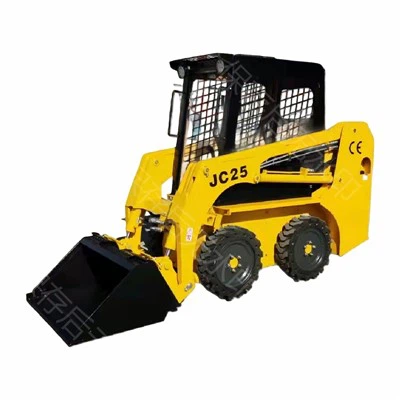
Skid Wheel Loader
The skid steer loader stands out with its ultra-compact design and zero-radius turning capability—boasting a turning
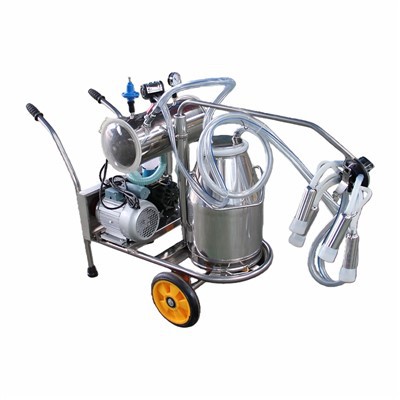
Vacuum Pump Cow Milking Machine
IMETEC Vacuum Pump Cow Milking Machine drastically reduce labor intensity for dairy farmers, replacing manual milking

Pull Manure Spreaders
The IMETEC solid pull manure spreaders delivers significant cost savings for farms by reducing reliance on chemical

Livestock Farming Feed Pusher Robot
The livestock feed delivery robot is a versatile intelligent feeding device suitable for various large-scale livestock

Feed Spreader Electric Three Wheel Feeding
The Yimeite electric-driven feeding equipment, built on the Hongdi three-wheeled chassis, is perfectly tailored to the

Mutifunction Four Wheel Sand Spreader
Tailored for the diverse daily operational needs of modern livestock farms, this farm-specific four-wheel sand spreader